

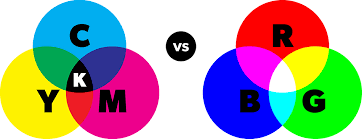
Wondering how colour printing works? Not sure which colour model is the one you need to think about when taking your project to your printer? If you get a little confused over RGB, CMYK, Hex and Pantone, don’t worry – you’re not alone. Although most designers are fully versed in colour models, the majority of business owners are more focused on getting their marketing material off to the printer.
To help you get a better idea of what types of colours are needed for effective colour printing that does not end up in disaster, keep on reading.
A Guide to Colour Printing
There are four primary colour models that are used in manufacturing, design and many other industries, from interior design to television and smartphone displays. Each colour model applies specifically to different devices. That is to say, using a colour model that is designed for television and mobile phone screens will end up causing a completely different result if used on printed items. Likewise, using more than two Pantone colours for your printed material will also end up with discrepancies. To help you better understand how each model works, we have compared them below:
RGB
Short for red, green and blue, the RGB additive colour model fuses these three colours together to create a huge spectrum of colours. This colour model is based on the Young–Helmholtz theory of trichromatic colour vision, which was developed by Thomas Young and Hermann Helmholtz in the mid 19th Century. It also uses James Clerk Maxwell’s colour triangle that took the theory to the next level in the later part of the 1800s. RGB output devices include television sets of various technologies, from CRT, to LCD, plasma, OLED, Quantum-Dots, along with computer and mobile phone displays, video projectors, multicolour LED displays and large screens. This colour model does not work with colour printers however, which are typically CMYK subtractive colour model devices rather than RGB devices.
CMYK
This colour model is short for cyan, magenta, yellow, and key (black). Typically used for colour printing, this subtractive colour model also describes the printing process as well. Four inks are usually used when items are printed in colour. There are many theories to why ‘K’ is used instead of ‘B’ for black. The main reason is that in four-colour prints, cyan, magenta and yellow plates are keyed or aligned with the black key plate. Some believe that K comes from the last letter in the word black, and that it was chosen because B means blue. Others say that K simply means K for key, because the colour black is often printed first as an outline. Whatever the case, this colour model is used for printing.
Hexadecimal
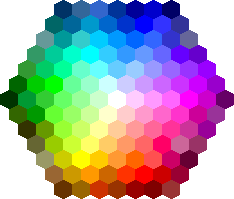
The hexadecimal colour model is often referred to as hex colours. With this model, colours are specified by their hex values. The colour code is a hex triplet, representing three values that dictate the various levels of component colours. Codes begin with a hash sign #, with six numbers following (eg. #1HB999). This colour model is used most often in website and HTML design that is viewed on a screen. Because of this, hex values often refer to the RGB colour space.
Pantone
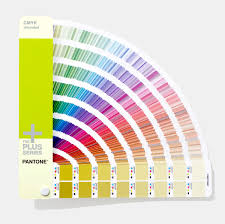
The Pantone Matching System meanwhile consists of thousands of swatches, each with a number and name. A majority of corporate colours that are used in logo design for instance can be found with a number in the Pantone system. This number is known as a PMS number. Pantone colours are sometimes also known as spot colours. Much like you would use paint swatches at a hardware store to choose a colour for your walls, this system uses matches. Although this system works well for single or two-colour designs it is not effective if there are more than two colours. If you do use this model, be sure to stick to one or two colours only to ensure best match.
Once your design is ready to be printed, get in touch with our printing and design service in KZN for a fast quote on colour printing in Durban.
 Minuteman Press Pinetown
One thought on “RGB, CMYK, Hexadecimal, Pantone What Colour Is It?”