
Copiers and multifunction printers (stand alone desk printers/copy machines) are very different.
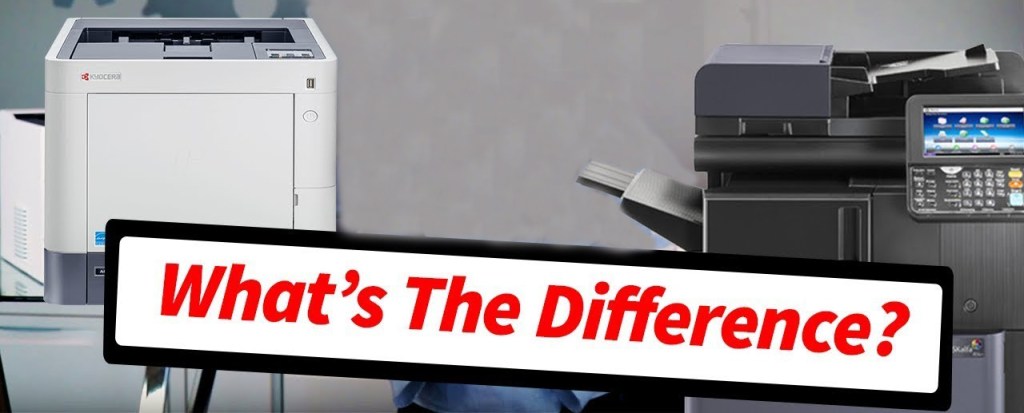
Copiers and MFPs have different features that lend themselves to different use. Copiers are well-suited to heavy use and document production. Copier-based machines are often designed to do heavy-duty work with finishing features such as binding and sorting.
Multifunction printers function well for everyday office use. They can handle the brunt of regular scanning, copying, faxing, and printing, and are generally a good all-around machine for the office to share.
Minuteman Press Pinetown uses two Black Digital BIZHUB 654 Machines for bulk orders on training manuals, instruction booklets, novels and documents. These machines can fold and staple.
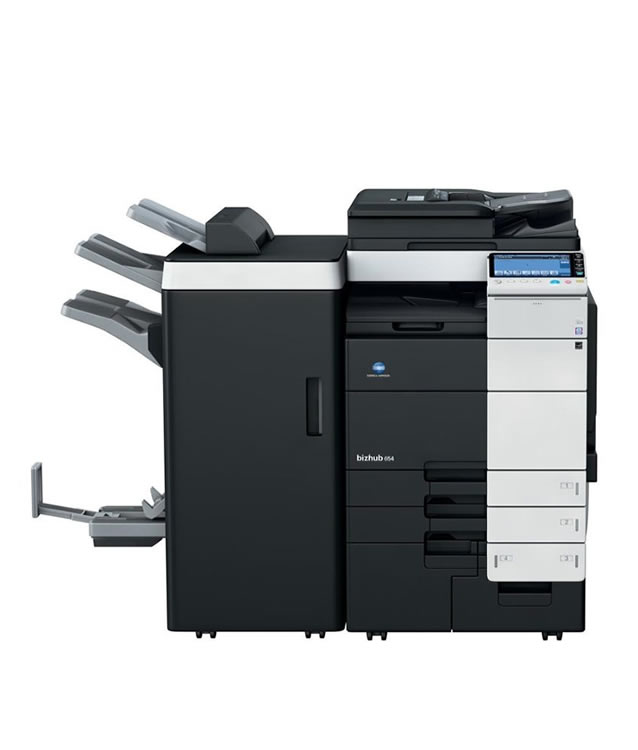
Minuteman Press Pinetown uses start of the art technology with the amazing BIZHUB 1070 Digital colour press which prints at speeds of 70 bond colour pages per minute!! Not to mention the highest and very accurate quality.
The large capacity trays at the right hand side ensure large stacks of paper to be loaded to ensure fast turn around time to print bulk orders, without having to constantly load paper in small trays. Keeping the production flow as fast as possible.
With this highly sophisticated printers, Minuteman Press Pinetown is able to offer digital printing jobs within 2-3 workings, especially flyers in 48 hours and business cards within 24 hours.
Contact us today for a quotation at sales@minutemanptn.co.za

For more industry related information on copiers and presses, read the below information
What’s the difference between a digital press and a copier? This was the question posed in the LinkedIn discussion group “Digital Printing.” The explosion of input that resulted reflects the intensity of emotions on all sides of the issue.
There are those who hold that it is the printing process that defines a press. Others see speed, printing tolerances, and other technical specifications as more important. Yet others look at how the press is operated, tolerance for downtime, or the applications it runs—even marketer opinion.
Paul Vermeersch, print specialist at Printconsultant.eu, explains the view that presses and copiers can be defined by how the ink or toner is laid down on paper. “If you consider a digital press [to be] a digital version of a printing press, only HP Indigo presses use parts of gravure and offset principles (liquid ink and indirect print with plate blanket and pressure cylinders),” he writes. “Most others today are sophisticated high-end xerographic color printers.”
Joel Lukacher, technical director at Family Labels, Margate, FL, is representative of the view that speed, printing tolerances, and other technical specifications are more important to determining a pedigree. “Both [digital presses and copiers] use photo xerography. The difference is the faster speed (70-200 ppm), tighter tolerances, and the tighter color controls. Also, a digital press would have more sophisticated inline bindery options, such as a saddle stitcher with three-knife trimming.”
The challenge, as discussion participants pointed out, is that some of the higher end color copiers offer faster speeds and tighter tolerances, too.
 Minuteman Press Pinetown