
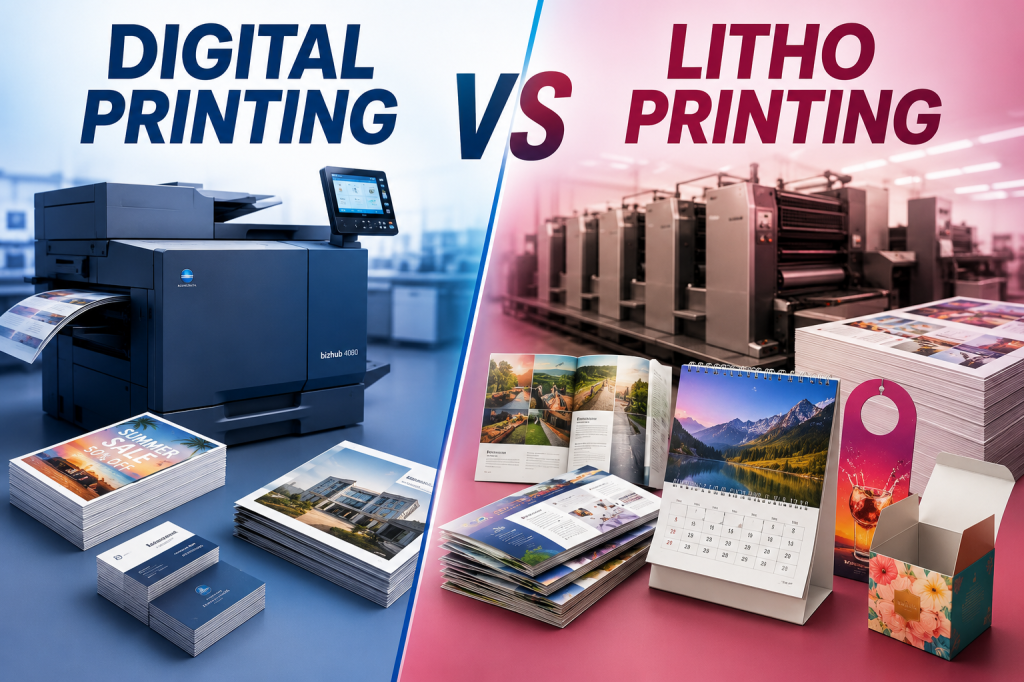
When you need something printed, one of the first questions to consider is “Should this be printed digitally or using litho printing?”
The answer depends on much more than simply the number of copies. The quantity, size, turnaround time, colour requirements, paper, finishing and setup costs can all influence which printing process offers the best result and the best price.
Understanding the difference between digital and litho printing can help you choose the right method for your project—and avoid paying for a printing process that isn’t suited to the job.
What Is Digital Printing?
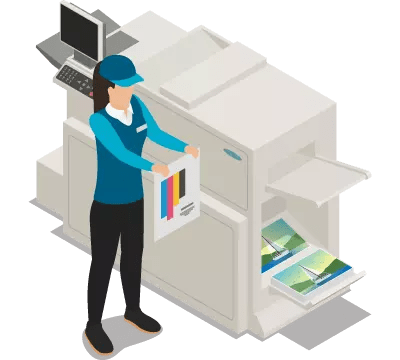
Digital printing is a direct-to-print process. Your artwork is sent from the computer directly to the digital production printer, without the need to manufacture printing plates.
This makes digital printing particularly useful when you need small quantities, fast turnaround times or personalised printing.
There is very little physical setup involved compared with litho printing. Once the machine is configured and the paper is loaded, production can begin almost immediately.
For example, if you need:
- 100 business cards
- 50 flyers
- 100 brochures
- 200 booklets
- 25 personalised invitations
- A small batch of labels
Digital printing can often be the most economical option.
Why is digital printing economical for short runs?
The biggest advantage is the low setup cost.
There are no metal plates to manufacture, no extensive ink setup and no large quantity of sheets required just to get the press running correctly.
This means that whether you require 10 copies or 100 copies, the initial setup cost remains relatively small.
Digital printing is therefore particularly cost-effective when you only need a small number of printed items.
What Is Litho Printing?
Lithographic, or litho printing, is a traditional offset printing process designed for high-volume production.
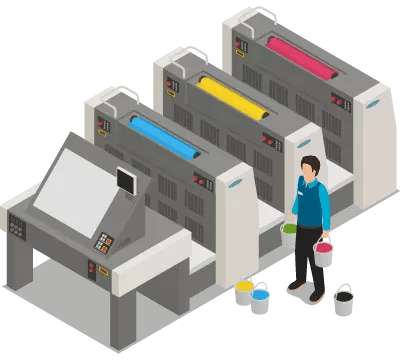
Unlike digital printing, litho printing requires considerable preparation before the first saleable sheet can be produced.
The artwork is separated into the required printing colours and metal printing plates are manufactured. These plates are then mounted onto the printing press.
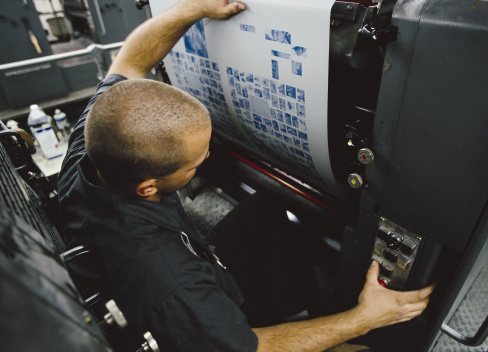
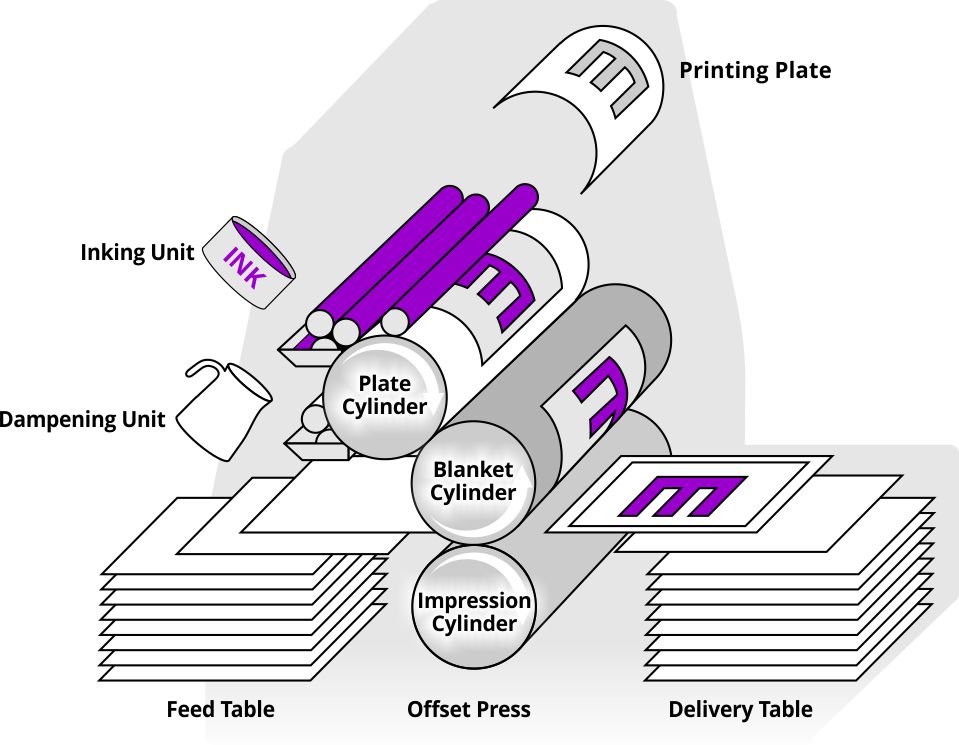
The press also needs to be prepared with the appropriate inks, chemicals and paper. The operator must then set up the registration, pressure, ink levels and colour balance.
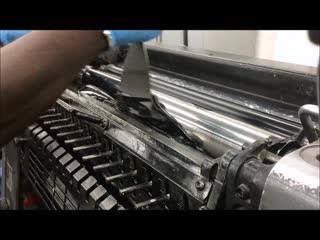
The press typically requires a substantial number of sheets to be run through the machine during setup. These sheets are used to bring the job into correct position and achieve the required print quality before production begins.
Those setup sheets are not normally saleable finished product.
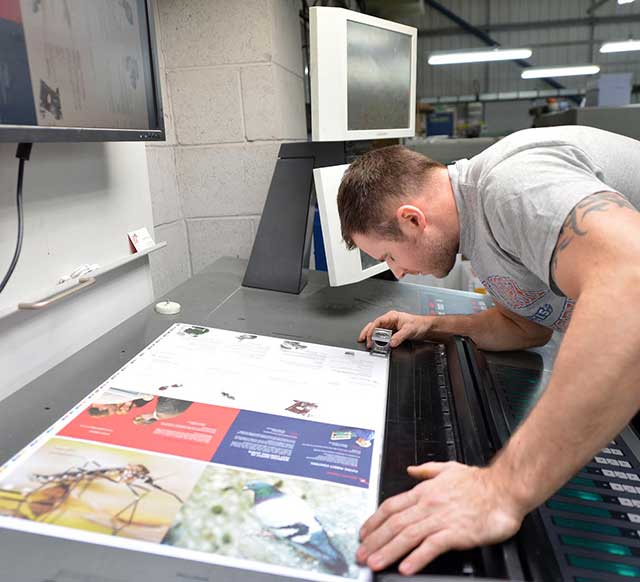
Why does litho printing cost more for small quantities?
This is one of the most important differences between the two processes.
Imagine you need only 50 brochures.
With digital printing, the printer can set up the machine and produce your 50 brochures with relatively little preparation.
With litho printing, the same 50 brochures may require plates, ink and press setup, plus a significant number of sheets used for registration and colour adjustments before the final production run begins.
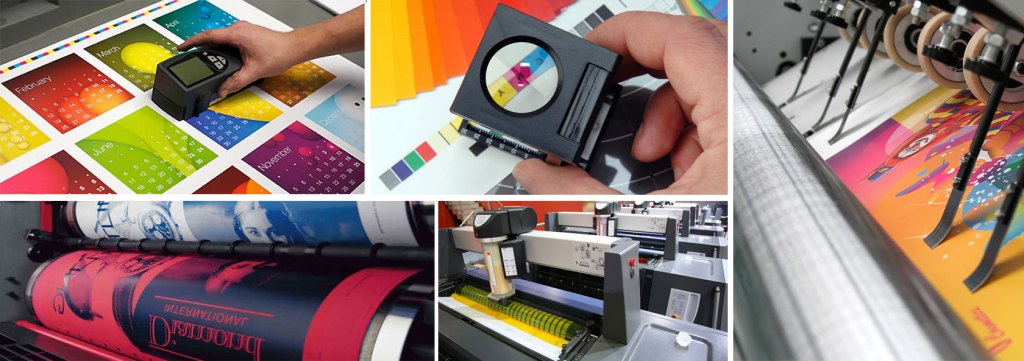
The setup cost therefore becomes a very large percentage of the total job cost.
The result is that litho printing can be extremely expensive for short runs, even though the actual cost of printing each additional sheet can become much lower once the press is running.
This is why litho is generally not recommended for small quantities.
Digital vs Litho: Setup Costs
A simple way to understand the difference is to think about where the money is being spent.
Digital printing:
Artwork → Machine setup → Print
Litho printing:
Artwork → Plate production → Press setup → Ink & chemical setup → Registration → Colour adjustment → Setup sheets → Production
Litho therefore has a much higher initial setup cost.
However, once that setup has been completed, the cost per additional sheet can become considerably lower.
This creates an important tipping point.
Small quantity = Digital usually wins
Large quantity = Litho can become much more economical
The exact break-even point varies depending on the job, paper, size, number of colours, finishing and machine being used.
Turnaround Time
Digital printing is often the quickest option because there is little preparation between receiving approved artwork and starting production.
For urgent work, digital printing can sometimes allow a job to be produced almost immediately, subject to the printer’s workload, stock availability and finishing requirements.
Litho printing requires additional preparation before production can begin.
Plates must be produced, the press must be set up, inks must be prepared and the machine must be brought into registration and colour.
This means litho generally has a longer setup time.
However, once the press is running, litho can produce large quantities very efficiently.
So the important distinction is:
Digital printing is faster to start.
Litho printing is designed to be efficient once large-volume production is underway.
What About Print Precision?
Both digital and litho printing can produce excellent-quality results, but the way the colour and registration are produced is different.
Digital Printing
Digital production presses can produce extremely sharp, high-quality prints, but there can be small variations in registration and colour density during production.
The movement between colours can vary slightly from sheet to sheet, depending on the machine and the substrate.
Digital colour is also generally created using toner or digital inks and colour management rather than physically mixing a specific spot ink on the press.
For many everyday commercial printing jobs, this is more than accurate enough.
However, when a job requires extremely precise spot-colour matching, litho can offer advantages.
Litho Printing
Lithographic printing uses physical printing plates and highly controlled mechanical registration.
The individual colour plates are aligned very precisely on the press, allowing the colours to be positioned accurately against one another.
Litho also has the ability to use premixed Pantone spot colours supplied by ink manufacturers.
This means that when a specific Pantone colour is required, the printer can use the actual premixed ink rather than attempting to reproduce the colour using CMYK process inks.
For brand-critical work, this can provide a significant advantage.
For example, if a company has a specific corporate green or orange that must be reproduced consistently, litho with a dedicated Pantone ink can provide a very accurate and repeatable result.
Can Digital Printing Produce 100% Accurate Colour?
Digital printing can produce highly accurate colour, but it is important to understand that colour reproduction is not the same as using an actual premixed spot ink.
A digital machine uses its own colour system, toner or ink technology, profiles and calibration to reproduce the requested colour.
There can also be variation between digital presses, substrates and production conditions.
Litho printing, when using a correctly specified Pantone spot colour, can use the actual ink colour specified for the job.
This is one of the reasons litho remains an excellent choice for brand-critical work, packaging and high-volume commercial printing where colour consistency is particularly important.
Sheet Size Also Matters
Quantity isn’t the only reason to choose litho.
The physical size of the finished product can determine which printing process is possible.
Digital presses have a maximum sheet size that they can accommodate. If a finished product requires a sheet larger than the digital machine can accept, litho may be the only suitable option.
This is particularly important for products such as large wall calendars, desk-pad calendars, certain packaging products, large-format commercial pieces and other oversized printed products.
For example, wall calendars and desk-pad calendars can require larger sheets and layouts that are not suitable for standard digital production.
In these situations, litho printing can provide the sheet size and production capabilities required.
What Is Best Printed Digitally?
Digital printing is generally the better choice for short to medium runs, particularly when turnaround time and flexibility are important.
Products that are often well suited to digital printing include:
- Business cards
- Flyers
- Small quantities of brochures
- Small quantities of booklets
- Invitations
- Greeting cards
- Short-run books
- Manuals
- Training materials
- Small batches of labels
- Posters within the machine’s maximum sheet size
- Variable-data and personalised printing
- Small quantities of packaging and promotional products
Digital is particularly useful when you need a small quantity quickly.
What Is Best Printed Using Litho?
Litho becomes increasingly attractive as quantities increase.
Products commonly suited to litho printing include:
- Large quantities of brochures
- High-volume flyers
- Large quantities of business stationery
- Books
- Magazines
- Catalogues
- Large-volume folders
- Packaging
- Point-of-sale materials
- Large quantities of calendars
- Wall calendars
- Desk-pad calendars
- Products requiring specific Pantone spot colours
- Large printed sheets that cannot fit through a digital press
Litho is especially useful when you are producing hundreds, thousands or tens of thousands of identical pieces.
A Simple Example
Imagine two customers both need brochures.
Customer A
They need 100 brochures.
Digital printing is likely to be the better option.
There is minimal setup, little wastage and the job can go into production quickly.
Customer B
They need 10,000 brochures.
Now the calculation changes.
Although litho has a much higher setup cost, that cost is spread across thousands of brochures.
Once the press is running, the cost of producing each additional brochure can be significantly lower.
Litho therefore becomes much more economical for the larger order.
So Which Printing Method Should You Choose?
There isn’t one printing method that is always better than the other.
Digital printing is about flexibility, speed and economical short runs.
Litho printing is about volume, efficiency, precision, colour control and larger production requirements.
The cheapest option isn’t necessarily determined by the price per sheet. The total cost of setup plus production needs to be considered.
A small litho job can be expensive because the setup costs are spread over very few finished products.
A large litho job can be economical because those same setup costs are spread over thousands of products.
Likewise, producing thousands of copies digitally may not be the most economical solution when a litho press can produce the quantity more efficiently.
The easiest rule to remember:
Need a small quantity quickly? → Digital printing
Need a large quantity? → Litho printing
Need a specific Pantone colour? → Litho may be the better option
Need an oversized sheet that won’t fit through a digital press? → Litho may be required
Need personalised or variable information on every piece? → Digital printing is usually the better choice
At the end of the day, the right printing method depends on your quantity, size, colour requirements, turnaround time, paper, finishing and budget.
A professional printer can look at the complete job and determine which process will give you the best combination of quality, price and production time.
 Minuteman Press Kloof
Leave a comment