• Corporate Gifts for Your Business

    Gift SPOTLIGHT


    Your company’s annual calendar is undoubtedly filled with everything from conferences and expos to networking events, client meetings, office celebrations and sports days. Corporate gifts are something that you should think about and invest in ahead of time so that you always have a unique way to welcome and show appreciation to your clients and potential clients.


    • Everyone Loves a Freebie


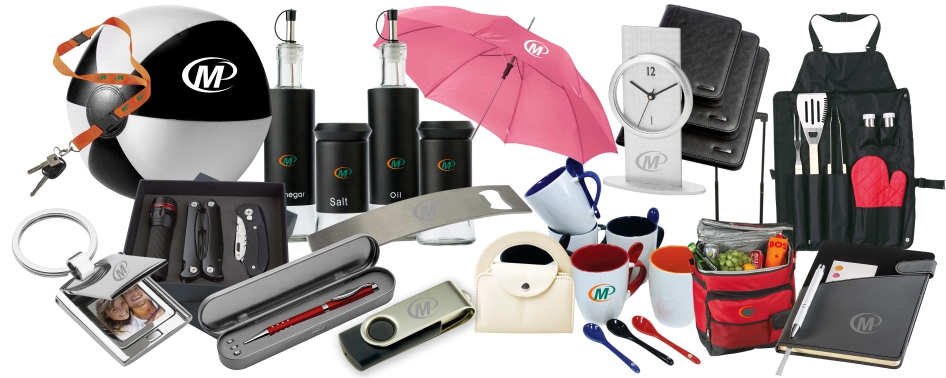
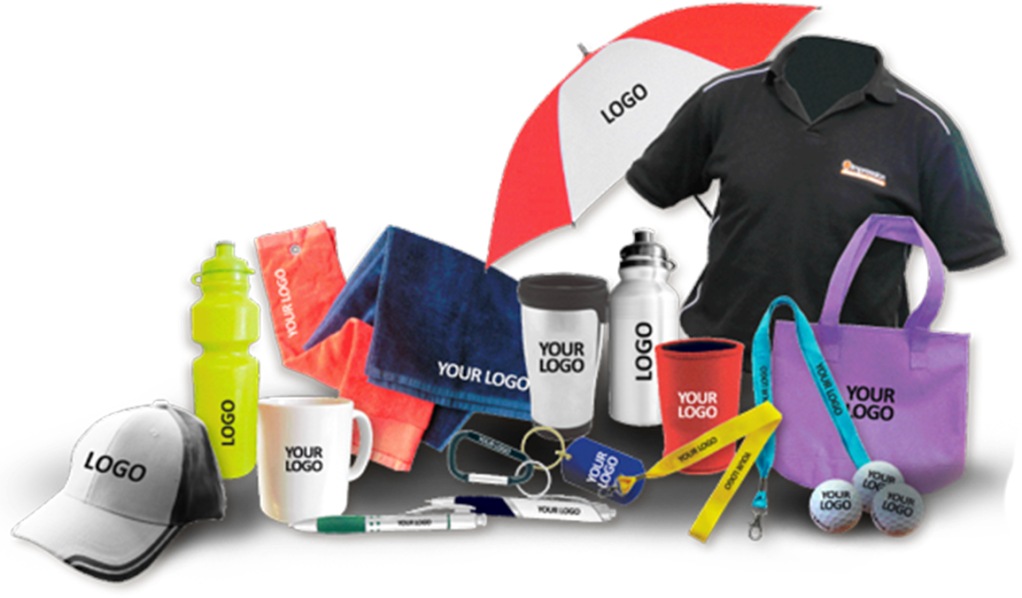
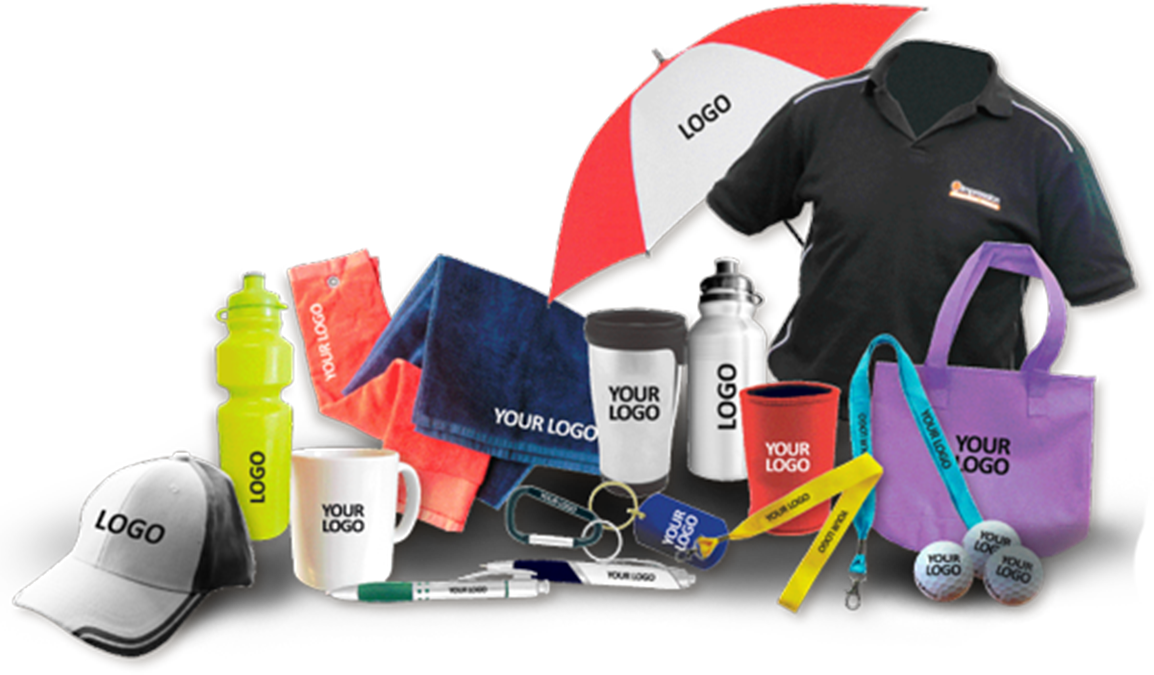
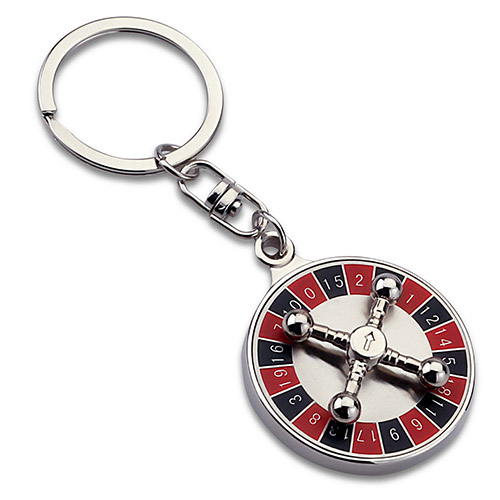
    Everyone likes to get something useful for free. While you can easily print your logo on any old item, consider promotional products that people will really use. If you are investing in promotional products, then there are many branded items that Minuteman Press can offer you:

    –  Magnets

    –  Pens

    –  Pencils

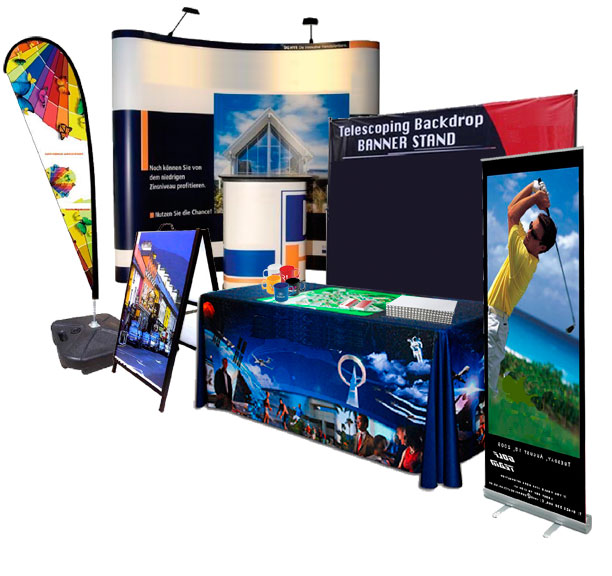
    –  Trade show supplies

    –  Mugs and cups

    –  Bags

    –  A variety of gift items


    • Memorable Thank You’s


    Corporate gifts will help you to thank your customers and staff in a fun and unique way. Honour their milestones and celebrate their achievements with custom gifts that you will be proud to give out.


    • Brand Awareness


    Besides having the ability to give out high-quality items, you will also be increasing your brand awareness. Minuteman Press can print your logo on items that reflect your corporate culture and business. When these items are used or worn, more people will be exposed to your brand and business. Many people also see promotional products as an alternative to business cards, because it’s something that can be kept on a person is constantly in front of a customer.


    Don’t delay when it comes to investing in corporate gifts and promotional products. Contact Minuteman Press in Pinetown for more information today.


  • Closing the Sale: Why Printed Sales Material is Essential

    use-print-collateral-marketing-materials2x


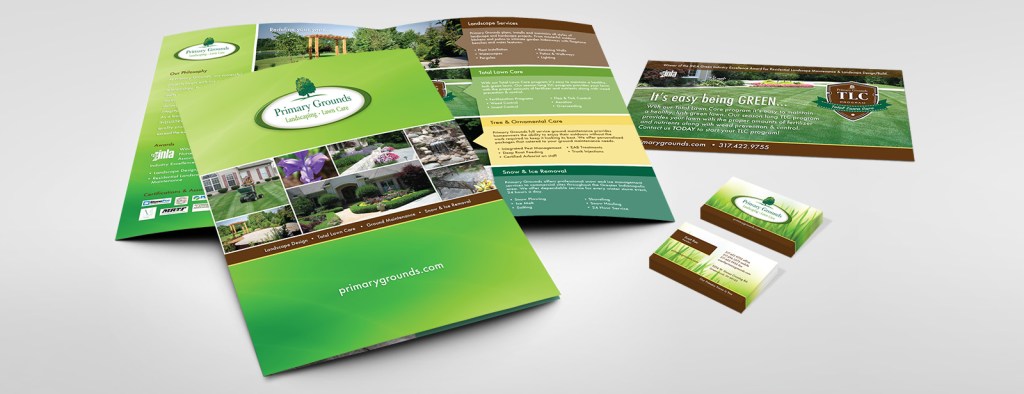
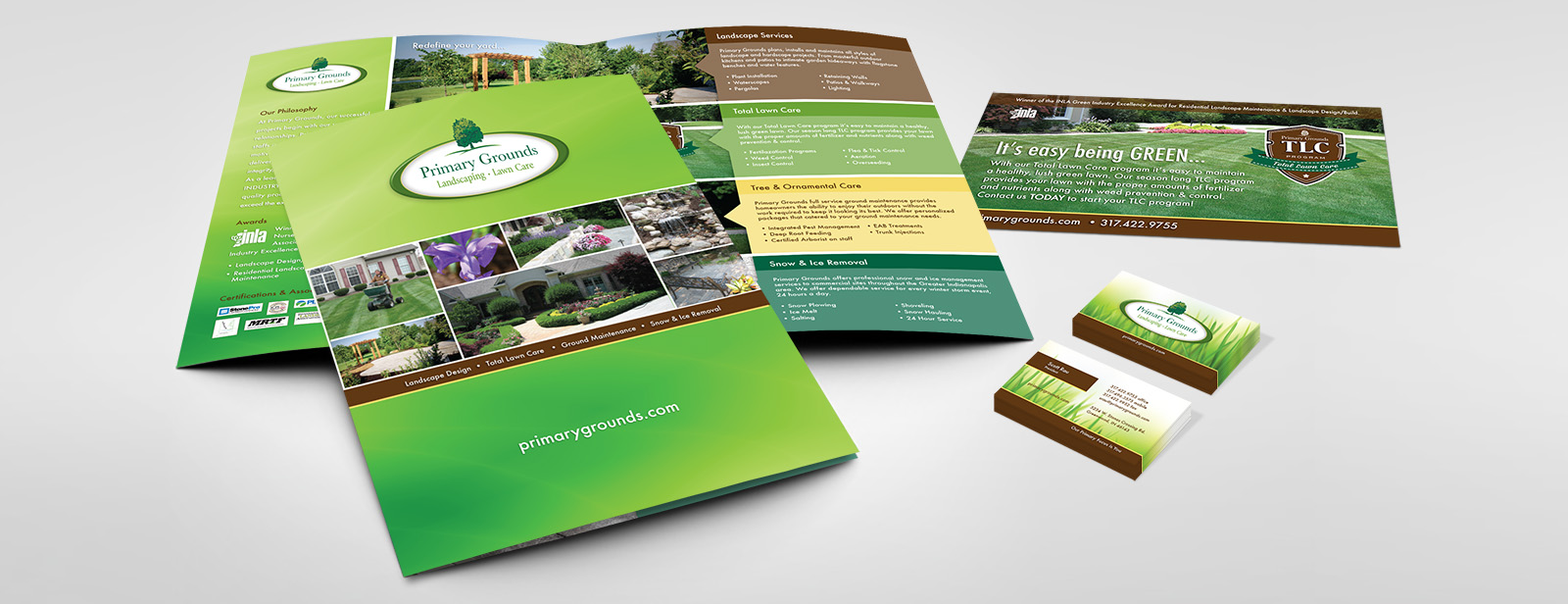
    Printed sales material plays an important part of your overall sales and marketing efforts. As a sales tool, there is no doubt that brochures, flyers, posters and presentation folders will always have their place. When you meet potential customers, how well your brand is remembered can often come down to how your brand is presented. A beautifully designed brochure that is presented to customers in a branded folder that also includes your card and any other relevant information will always make a world-class impression.


    Despite the obvious benefits of printed sales material, many businesses assume that they can focus all their efforts to digital strategies and still reap the same rewards. Sadly, if you meet customers face to face, there is no substitute for tangible marketing material that showcases your brand.


    The Importance of Printed Sales Material


    Why is printed sales material such an important tool? For starters, it offers the following advantages:


    ·         Easier marketing. When you have marketing collateral on hand, it will be a lot easier to provide potential customers or clients with an overview of what you offer. Whether you have a stock of printed brochures, or full promotional packs that include brochures, business cards, fact sheets and other useful information, printed material will almost always offer a more impressive introduction compared to a link to your website.


    ·         Enhanced competition. In order to stay ahead of your competition, you need to be able to provide potential customers with a world-class experience. If you do not offer anything besides a business card, and your competitors are presenting customers with presentation folders that are full of useful information that helps to close a sale, you are basically losing out.


    ·         Easier sales. On that note, brochures and other material also simplify the sales process. If you have a printed price guide that outlines all of your major products, customers will not have to ask you for this information. Instead, they can take home your brochure and (hopefully) return to seal the deal. On the other hand, imagine what would happen if you had nothing to show potential customers. Your sales team would quickly get frustrated at having to repeat information every few seconds.


    ·         Visual connection. Many people use visual connections when making a decision. As brochures and other printed material such as flyers, posters and promotional products are placed in your customers’ hands, they have no choice but to view the products. Leafing through a pamphlet can make it easier for customers to connect to your brand. For this reason, printed material will never be a waste.


    ·         Holistic marketing. Finally, printed promotional material can also help to create a holistic, integrated marketing experience. The most effective way to reach customers on every level is to use printed material alongside digital material. A website, social media page, brochure and flyer can be a powerful combination when used as part of a broader campaign. This is quite easily the simplest way to ensure a well-rounded brand experience.


    To learn more about printing in Durban, get in touch with Minuteman Press Pinetown today.


  • Calendars & Diaries – Do People Still Use Them?

    Calendar 

    Are corporate calendars and diaries still relevant? Do people even use them anymore? In a nutshell, yes. Printed scheduling tools remain useful for anyone who needs to keep track of tasks. Used by a diverse number of people, from students to freelancers, employees, managers and business owners, these tools offer a visual, effective, fast way to stay on track of projects, meetings and other engagements.


    In today’s digital era, it is natural to wonder whether printed tools still have much value. The good news is that there will always be a place for corporate calendars and diaries. Keep reading to find out why these tools will never go out of fashion.


    Top Reasons to Invest in Corporate Calendars and Diaries

     Calendar samples

    Some of the top advantages of printed corporate calendars and diaries include the following:


    ·         They are easy to update. Rather than finding a phone or opening up an online version, printed diaries and calendars can be updated in a matter of seconds. Most people keep scheduling tools on their desk, or in their bags, where they can be easily accessed. Entering information by hand can often also be a lot quicker than typing it in via keyboard. This makes printed scheduling tools a far quicker and far more convenient option over their digital counterparts.


    ·         They require no passwords or downloads. On a similar note, there are no passwords to worry about either. Assuming that they are kept safely, printed schedulers are far more secure than any app – especially one that you have to download or update. Although online versions often come with enhanced security and auto-update features, nothing can replace a real life version when it comes to safety and privacy.


    ·         They will not crash or break. Likewise, there is no risk of your calendar suddenly crashing with your app starts working. Almost every single app has its risks, even if it has been rated highly by users. It can be hard to know how apps perform until you download them and try them for yourself. Digital diaries and calendars need to be hosted on a secure platform in order for you to access your schedule. An offline version will never put you at risk of crashes or nasty viruses.


    ·         They are great for visual people. If you are one of those people who prefers to have a clear visual outline of what you need to do each day, a real life calendar or diary may just offer a more rewarding option than a digital schedule. This gives you an easy to access snapshot of your day that you can view without having to open up any app or online web page. Being able to manually tick off items as they are completed is also satisfying.


    ·         They are a useful marketing tool. Finally, both diaries and calendars offer a unique way to keep your brand top of mind. When sending branded schedules to your clients, you will be sure that they remember your brand whenever they use your diary or calendar. This can also be a great in-house tool to help reinforce your brand to employees as well.


    Now is the best time to start thinking about your company calendars or branded diaries. To learn more about printing corporate calendars and diaries in Durban, get in touch with Minuteman Press Pinetown today.

  • Printers in Pinetown explain how you should print posters

    Wendys

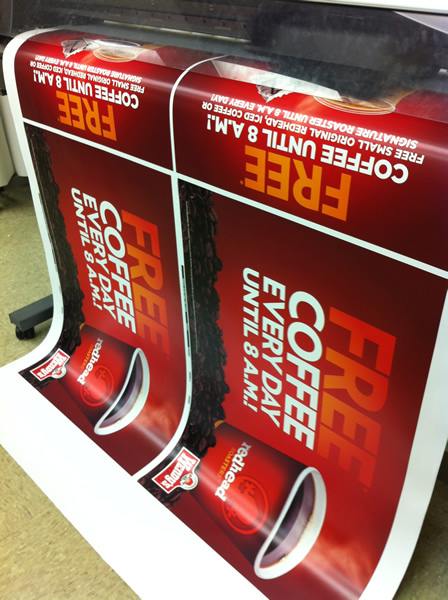
    At Minuteman Press Pinetown, we have an in-house team of excellent designers who can design everything from posters and business cards to show-stopping banners, postcards, invitations and catalogues for you.

    Poster design is something that we excel in here at Minuteman Press. With years of experience in colour psychology, top design software and advertising, we are your one-stop shop for everything related to graphic design and printing.

    Many of our clients are interested in the design process. Here are a few things that you can keep in mind if you want to brainstorm your own concepts:

    • Colours: Always consider the colours you use very carefully. Each colour should serve a purpose. Too many bright colours can make the poster difficult to read and people might lose interest and move on before they even know what it is that the poster is advertising.
    • Printing: Always do thorough research before you decide which printing company you are going to partner with. Choose a company that has a good reputation for producing high quality prints. Remember that a good design is wasted if the printing looks cheap.
    • Using the space: When designing the layout of the poster you should always try to use all the space available to you. Don’t cram graphics and text into the layout – remember that the poster needs to be easy to read from afar.
    • Pictures: A poster is a visual representation of an idea. Pictures can be more powerful than words, so choose your images wisely.
    • Word count: Minimise the amount of copy you include in your poster design. Always try to keep your text content concise and to-the-point so that people who only have time to glance at the poster will be able to get the general idea of what you have to offer.
    • Text size considerations: The text that is used for your heading should be readable six metres away from the poster and the text that forms the body of the poster should be readable from at least two metres away from the poster.

    Partner with Minuteman Press for poster printing in Pinetown

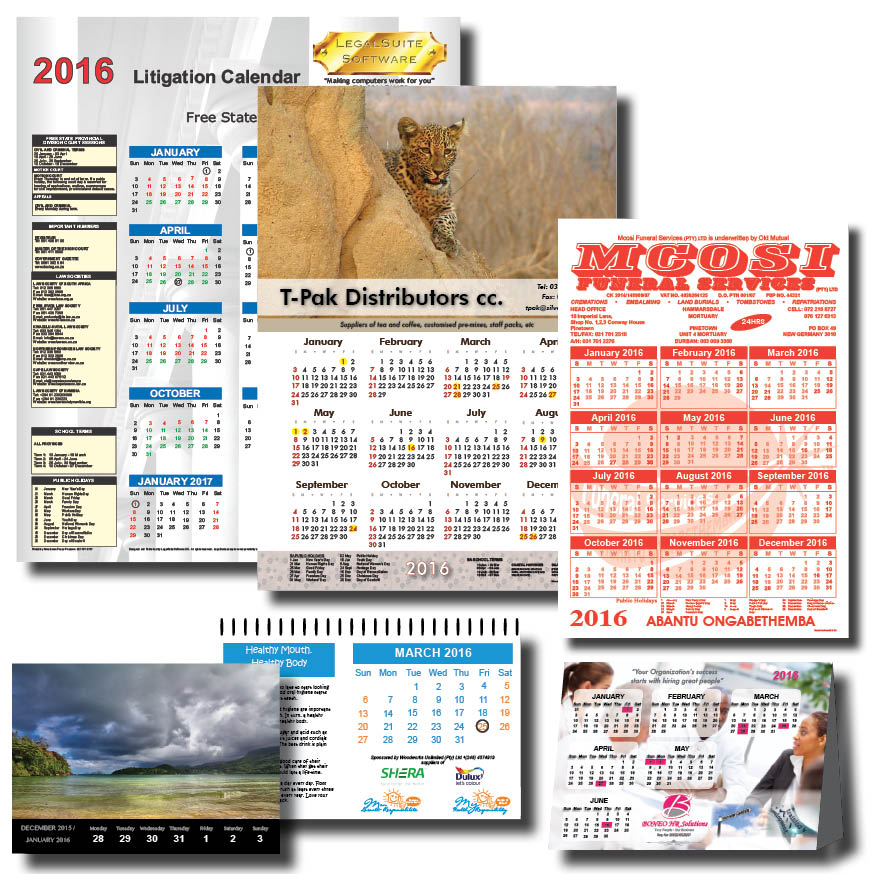
  • Which Calendar type best suits your Marketing Strategy?

    Calendar samples

    Calendars are the only type of advertising that is seen by your clients all year round, whereby you only have the expense of marketing costs at the end of year when you are purchasing your calendars for the following year.

    As opposed to advertising such as newspaper, magazines, radio and distributed media such as flyers, this type of exposure is a very effective marketing medium.

    There are several types of calendars available that can be custom-made for you with your logo, company details and even pictures of your products and/or services. You would need to decide which type of calendar best suits your marketing strategy to give to your clients, whilst taking your budget into consideration.


    Wall Calendars

    Wall Calendar Hole - A4 or A3

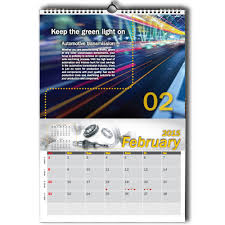
    These are the calendars which hang on your wall onto a hook or nail. These are usually the largest form of calendars which range from A2 to A0, which generally display all the months of the year with company details and pictures. For a more cost-effective approach, you could digitally print A4 or A3 calendars in full colour with a hole drilled at the top. These can have smaller quantities available for the small to medium enterprises that have fewer than 100 clients that they would like to distribute calendars to.

    Many companies will include pictures of the products or just use general pictures of landscapes and animals to make the calendars appealing for clients to want to hang them on their wall. This ensures that your contact details are easily visible at all times. For a more impressive calendar, these can be rimmed with gold or silver trimming at the top of the calendar with a hook or the bottom, or even both. For budget constraints, these calendars can simply have a hole drilled to hook them onto the nail.

    Wall Flip Calendars

    Wall-Flip

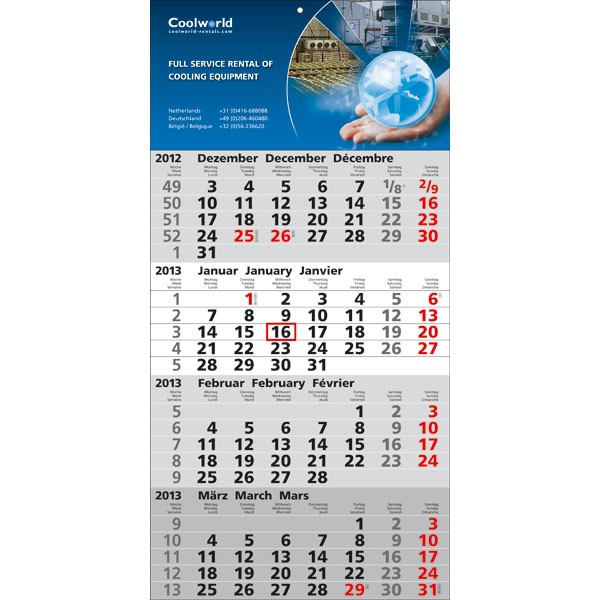
    These are calendars that are wire bound with a hook which hooks onto a nail, however these have several pages in the calendar, as opposed to the wall calendars which have just one page containing all the months of the year. The flip calendars can contain a page for each month, thus 12 pages per calendar or for budget constrains the calendar can be divided into 4 pages containing 3 months per page. Each page can have a different design or picture, as well as previous and following months for easier referencing or planning. These type of calendars are best suited to companies that would like to share as much information about their business and their products or services as they possibly can. Whereby 12 pages can be used for advertising as opposed to just one page with very little space for advertising, due to the space required to fit all twelve months.

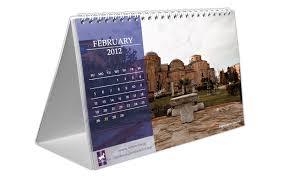
    Desktop Flip Calendars

    Desktop - Flip A4

    These will have the same style and affect as the wall flip calendars, which are wire bound and flip over each month or quarterly as required. The difference will be that these will not be displayed on the wall as they will be bound onto a stand which will be placed onto your clients desk. Easily visible and even closer to the telephone for your client to call you whenever they require your services. These typically come in A5 size prints which will be digitally printed and have no minimum quantities required. Companies can either display their products and services, or even include some information about a specific item or a discussion. Simple “Did you Know?” could be used to advertise your services each month to make it intriguing. NPOs could use these as a method to advertise their achievements from the previous year to inspire more to invest in their efforts. Should you not wish to advertise anything other than just your company logo and information, you could fill each page with a landscape or animal to create beautifully printed calendars that add serene setting for your clients’ desk.

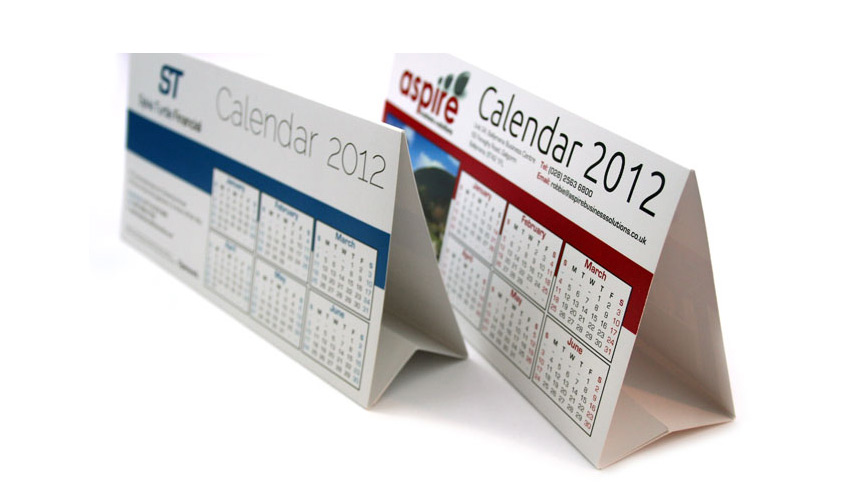
    Desktop Tent Calendars

    Desktop - Tent Calendar

    These are the most cost effective calendars to distribute to clients, which are bent into a Tent-like shape and stands on the desk. Each side contains six months of the year and your company details, making it easily accessible for the clients to call you. At the bottom of the calendar typically contains any holiday dates or school terms. These are printed digitally and can be done in small runs or larger quantities, depending on your requirements and budget. These do not take long to assemble and can be manufactured in a matter of days, ready for distribution to your clients, as opposed to the larger wall calendars that may require rimming or the flip calendars that require wire binding.

    Desktop Pad Calendars

    These calendars are printed with 12 very large pages which contains blocks and the dates of the month. This gives the client space to write any notes or schedules for those particular dates. There is more than enough space to include your logo, details and services to keep on your clients desk daily for the entire year.  These pages are glued together with a board and have plastic corners to tuck the pages in so that they don’t lift as these are generally left on the desk and your client will be working over it and bumping it continually with their arms. The good news is they will be looking at these calendars on a daily basis and at the end of every month they will tear off the page and start a fresh new month, whilst looking at your details and reminded of your services yet again. Due to the size of these calendars they can not be printed digitally, unless an A3 size is used, thus larger quantities of 100 or more are recommended. These calendars can either be printed in full colour or for more cost effective options you could print just one, two or three colours as per you companies brand identity.


    Contact Minuteman Press Pinetown today for a wide range of custom-made calendars to suit your business.


  • Do Flyers & Brochures Still Work?

    brochures 

    Just how effective is printed marketing material? What place do flyers and brochures have in our digital era? How can you use printed flyers and brochures to grow your business?


    If you thought that digital trumps print, you may be surprised to know that print has every bit as much value as it did before the rise of online brochures and flyers. The most effective way to reap the benefits of both print and digital is to aim for an integrated campaign that incorporates both. Keep reading to find out why printed material will always add value to your business.


    Why Invest in Printed Marketing Material?


    Some of the ways that printed marketing material adds value include the following:


    ·         Stand out


    Printed brochures and flyers have the ability to stand out from the crowd – especially in today’s heavily digital focused era. With the huge volume of emails and online ads that consumers see each day, printed items tend to be more memorable. The secret to ensuring that you stand out without resorting to unwanted spam is to choose your audience carefully and present your material wisely. A branded presentation folder that includes your brochure, a flyer advertising a current special offer, a business card and a letterhead with a personal note can be a great way to impress potential clients after a meeting.

     168574_3240658_436003_image

    ·         Increase exposure


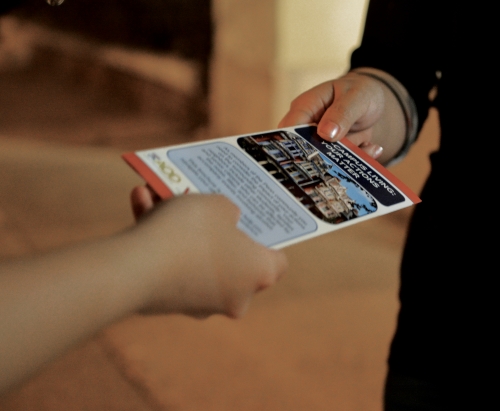
    Another benefit that print has over digital is that it increases exposure. When you send an email, it will only be seen by those you sent it to. A printed document however will be seen by everyone who comes into contact with the material. It may be picked up from your customer’s desk, or handed out to a marketing team by your client. This ensures a far higher exposure compared to an email that will be seen once and forgotten.


    ·         Enhance your message


    Although printed brochures and flyers can be effective as a stand-alone campaign, they are even more effective when used as part of your integrated marketing strategy. This gives you the best of both worlds, allowing you to reach people online and through print. It also helps to create a cohesive brand experience, while reinforcing your message across multiple channels.

     images7P0KBAM8

    ·         Ensure credibility


    There is also often a greater sense of credibility when it comes to printed flyers and brochures. There is still a high degree of distrust in online technology – especially when you cannot see who sent the digital flyer or brochure. A printed document on the other hand offers no risk of viruses or spam caused by pop-up ads or dodgy link. This in turn ensures a far higher level of credibility and trust for your business.

     untitled

    ·         Increase engagement


    You will also be able to boost engagement. If you place printed flyers or brochures into niche magazines, you can reach the right people at the right time – something that can be much harder online. As people often find it easier to read printed paper than a digital screen, you can also ensure a higher level of engagement with the help of your printed items.


    Interested in learning more about brochures and flyers can help you stand out? Contact Minuteman Press Pinetown to find out more about how to get started with printed marketing material in Durban.


  • Top 5 Corporate Gifting Mistakes

    21500643488

    Corporate gifting is a fun way to ensure that your business is kept top of mind for your customers. Unlike promotional products, corporate gifts are typically not branded with your company name or logo in the traditional sense. Although your branding can be used subtly, the intention is not so much to promote your company but to rather leave a lasting impression.


    There are many different types of gifts that can be given to clients, from hampers to wine, seasoning, useful items and seasonal gifts sent at the end of year. Rather than branding the gift itself, you can promote your business discretely through printed materials such as personalised greeting cards, presentation folders and even branded gift packaging. When done properly, corporate gifting can help you position your company and build relationships with your clients. When done without much thought however, much can go wrong…


    Avoid These Corporate Gifting Mistakes


    Some of the biggest corporate gifting mistakes to avoid include the following:


    1.       Confusing gifts. Stay clear of any gifts that have double meaning or an unclear purpose. You may not realise that your gift is ambiguous, but if there is even the smallest chance that clients do not understand the gift’s purpose, message or design, it is best to choose something else. If possible, get a second opinion from a few people before finalising your selection. This will help you reduce the chance of a gift that leaves clients more confused than anything else.


    2.       Offensive gifts. On a similar note, it is also never an idea to offend your clients – whether inadvertently or in an attempt at making a joke. End of year gifts should be approached carefully. Although a number of your clients may celebrate Christmas, not all of them do. A Christmas themed hamper may therefore not be as effective as a neutral year end celebration gift that focuses on the new year to come rather than religious holidays. It is also best to avoid gifts that have any strong language, potentially offensive message or any other feature that could offend.

     gambline

    3.       Overly cheap or pricey gifts. Although it is never idea to give your loyal customers a super cheap gift that will be thrown out by the end of the day, it may also not be ideal to give something ridiculously expensive, either. To ensure that your gift is useful without being too fancy or too cheap, set a budget and stick to it. You could do some research into the average gift value for South African businesses, or even consider any gifts that you have received from businesses.


    4.       Promotional product gifts. This is not the time to bring out those branded promotional mugs or caps. Using promotional products as corporate gifts can be tacky, to say the least. Instead, use your packaging and marketing material to brand your gift subtly. Remember, this gift is more about your customer than your company. You are essentially thanking them for their support. A personalised card goes a long way in boosting your reputation.


    5.       Inappropriate gifts. Finally, it is a good idea to think carefully about whether the gifts you have chosen are appropriate or not. You may find the gift hilariously funny, but is it right for your business? If there is even a small chance that even a few customers will not see the joke, play it safe and consider something else. Funny messages can easily go wrong, while simple messages and gifts that add genuine value will always be well received.


    Contact Minuteman Press Pinetown today for a wide range of corporate gifting presentation ideas.

  • Minuteman Press Pinetown lets you design and print online

    design online

    Do you want to start designing and printing your business cards, stickers, postcards and other colour copies online? Then it’s time you started using Minuteman Press Pinetown’s online design tool. This tool makes it easy for you to choose the right template, customise your prints and even order your prints online.

    Stop wasting time in traffic or in meetings with graphic designers and printers – take care of everything from the comfort of your own home by using our online design tool. We offer free deliver, which is another added benefit of using our online design tool called Shop Minuteman.

    Here are some of the things you can design and print online:

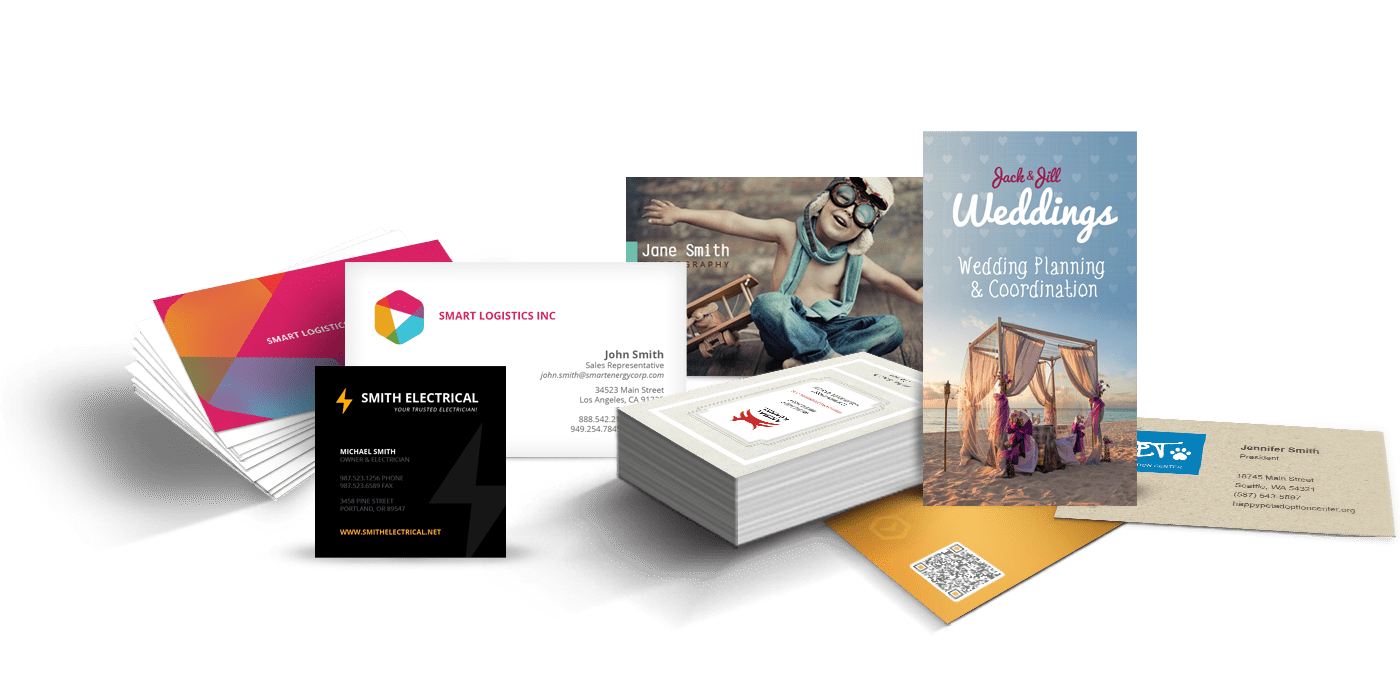
    • Business cards. A business card is a professional and convenient way of putting forward your company name to clients as well as providing them with necessary information and incorporating good graphic design elements is what will make your business card memorable.
    • Stickers and labels: Almost any office needs stickers and labels. Our sticker and label printing isn’t only affordable, but virtually everything can be customised.
    • Postcards: Whether you’re printing a few postcards for your friends or you’re printing thousands of postcards for your company, we can handle the job.

    Business_Cards

    If you’re looking for an easy-to-use design solution that gives you full control of the creative process (while saving you money and effort at the same time), then Shop Minuteman is for you. Be your own graphic designer by using Minuteman Press Pinetown’s online design and printing tool today. Contact us if you have any questions or queries about this service.


  • Top 3 Mistakes Businesses Make With Their Trade Show Printing

    trade-show-materials

    Trade show printing applies to a wide range of marketing products that you may be using at your upcoming event. Whether you are organising last minute flyers, planning your brochures well in advance, or even considering items such as presentation folders, business cards, posters or promotional gifts to give trade show guests, you should never take short cuts.


    A rushed, poorly planned or poorly conceptualised poster, invite, flyer or catalogue can end up causing your brand more harm than you may realise. To find out more about the worst trade show mistakes (and how to avoid them) keep on reading.

     Marketing-Your-Small-Business-With-Brochure-and-Flyer-Printing

    Trade Show Printing Mistakes to Avoid


    In no particular order, some of the top trade show printing mistakes to avoid include the following:


    1.       Not planning ahead


    The primary reason for trade show stress and disorganisation is a lack of planning. If you do not have a plan in mind with clear goals and steps for each stage of the process, you will quickly start to feel frazzled. You may also end up missing print deadlines or going well over budget because you have not planned in advance. As soon as you book your booth at the show, you will need to get your material conceptualised, designed and printed. If you leave it too late and suddenly realise that you will need leaflets for guests, business cards to hand out, posters explaining your brand and gifts to leave a reminder of your business, you will end up having to do last minute design and printing. This doesn’t only increase your risk of poor quality and rush jobs – it also means you spend far more in the long run.


    2.       Vague messaging


    At trade shows, you have a matter of seconds to catch visitors’ attention and get them interested in what you are offering. If your booth and marketing material does not have any clear message, you are essentially causing people to lose interest. Although printing is important, you first need to ensure that you have a design that clearly outlines your product, services and USP. A beautifully designed booth that has beautifully designed, professionally printed brochures, cards and leaflets, along with gifts for visitors to take home and keep your brand front of mind will always do well at trade shows.


    3.       Not proofing your items before printing

    Have you proofed your brochures, cards, flyers, posters and material before it goes to the printer? You would be surprised how many businesses don’t bother. Once thousands of items have been printed, it will be a lot harder to make changes or fix any errors. Nothing is worse than material that has spelling or grammar mistakes – especially at a large trade show that has large numbers of people come through the doors each day. Make sure that you have someone go over every item you print before it is sent off. This will save you a great deal of time and stress, while preventing a waste of trade show material.

     Shouldve used minuteman-01

    Looking for a reliable, professional printer in Durban and surrounds? Contact Minuteman Press Pinetown

  • RGB, CMYK, Hexadecimal, Pantone What Colour Is It?

    Unknown

    Wondering how colour printing works? Not sure which colour model is the one you need to think about when taking your project to your printer? If you get a little confused over RGB, CMYK, Hex and Pantone, don’t worry – you’re not alone. Although most designers are fully versed in colour models, the majority of business owners are more focused on getting their marketing material off to the printer.

    To help you get a better idea of what types of colours are needed for effective colour printing that does not end up in disaster, keep on reading.

    A Guide to Colour Printing

    There are four primary colour models that are used in manufacturing, design and many other industries, from interior design to television and smartphone displays. Each colour model applies specifically to different devices. That is to say, using a colour model that is designed for television and mobile phone screens will end up causing a completely different result if used on printed items. Likewise, using more than two Pantone colours for your printed material will also end up with discrepancies. To help you better understand how each model works, we have compared them below:

    RGB

    Short for red, green and blue, the RGB additive colour model fuses these three colours together to create a huge spectrum of colours. This colour model is based on the Young–Helmholtz theory of trichromatic colour vision, which was developed by Thomas Young and Hermann Helmholtz in the mid 19th Century. It also uses James Clerk Maxwell’s colour triangle that took the theory to the next level in the later part of the 1800s. RGB output devices include television sets of various technologies, from CRT, to LCD, plasma, OLED, Quantum-Dots, along with computer and mobile phone displays, video projectors, multicolour LED displays and large screens. This colour model does not work with colour printers however, which are typically CMYK subtractive colour model devices rather than RGB devices.

    CMYK

    This colour model is short for cyan, magenta, yellow, and key (black). Typically used for colour printing, this subtractive colour model also describes the printing process as well. Four inks are usually used when items are printed in colour. There are many theories to why ‘K’ is used instead of ‘B’ for black. The main reason is that in four-colour prints, cyan, magenta and yellow plates are keyed or aligned with the black key plate. Some believe that K comes from the last letter in the word black, and that it was chosen because B means blue. Others say that K simply means K for key, because the colour black is often printed first as an outline. Whatever the case, this colour model is used for printing.

    Hexadecimal

    The hexadecimal colour model is often referred to as hex colours. With this model, colours are specified by their hex values. The colour code is a hex triplet, representing three values that dictate the various levels of component colours. Codes begin with a hash sign #, with six numbers following (eg. #1HB999). This colour model is used most often in website and HTML design that is viewed on a screen. Because of this, hex values often refer to the RGB colour space.

    img_colormap

    Pantone

    The Pantone Matching System meanwhile consists of thousands of swatches, each with a number and name. A majority of corporate colours that are used in logo design for instance can be found with a number in the Pantone system. This number is known as a PMS number. Pantone colours are sometimes also known as spot colours. Much like you would use paint swatches at a hardware store to choose a colour for your walls, this system uses matches. Although this system works well for single or two-colour designs it is not effective if there are more than two colours. If you do use this model, be sure to stick to one or two colours only to ensure best match.

    pantone

    Once your design is ready to be printed, get in touch with our printing and design service in KZN for a fast quote on colour printing in Durban.

  • Follow these steps for effective brochure design and printing

    brochures

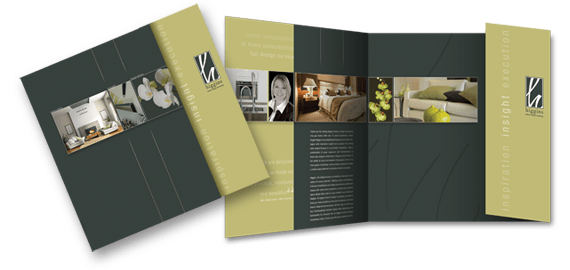
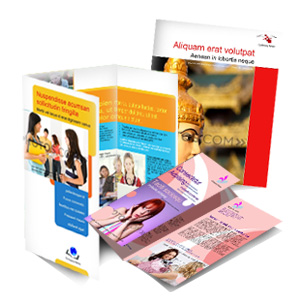
    Brochures are highly effective marketing materials. They offer a great way to supply information, whether it’s to advertise or market, educate or inform or entertain. They provide the information people need but are generally short enough that they remain easy to read. The following five steps will help you to create an effective brochure that will get the results you’re looking for:

    Step 1: Identify the Brochure’s Purpose

    Determine what you aim to achieve by having the brochure i.e. when a customer reads it, what do you hope will come out of this. Some uses for brochures include advertising, marketing, educating, informing, entertaining or a combination of these.  A clear identification of the purpose and communicating it to everyone involved in the project will help ensure the brochure is an effective one.

    Step 2: Identify the Audience

    Knowledge of the audience that the brochure is intended for, helps you to craft a message which is suitable for them.  Depending on their knowledge or skills set, the terminology and language you use will be different. Novices in the subject area should be addressed differently compared to experts. A good starting point in the process of identifying your audience is to compile all the information you have about them.

    Step 3: Craft the Message

    Armed with your purpose and knowing who you want to reach will assist you in crafting the message. Knowing who the audience is, is the starting point, but you also need to distil what they need or want to know. This will help you to shape your brochure’s message:

    • What types of information will support the purpose of the brochure?
    • Is what you’re writing relevant to their wants and needs?
    • Consider the tone of the piece – is it upbeat, or serious?
    • Are the types of words you’ve chosen appropriate for your audience’s education level and technical understanding?
    • Make sure you include a strong call to action in your brochure – again, think back to the purpose you identified and provide a succinct call to action that will make it easy for the reader to take the next step.

    Step 4: Design the Brochure

    When designing your brochure, keep the following elements in mind:

    • Size, how large or small does the brochure need to be to accommodate your copy and images?
    • How much white space do you want to have?
    • How many panels will the brochure have?
    • Do you need to include a business reply card in the brochure?
    • Which colours and images will you be using?

    Once you have taken into account the above process, get in touch with Minuteman Press, Pinetown. We will handle all your printing requirements, from black-and-white copies to full-colour printing. We will provide you with a printing quote that will not break your bank


    BROCHURES