
Which digital printing trends are shaping the year ahead? Digital prints continue to evolve and adapt, as technology continues to change the way that digital prints are created. Not too long ago, we shared some broader printing trends.
Today, we’re taking a closer look at digital printing to see how it has shaped the way that flyers, brochures, business cards and other marketing material is printed. Keep reading to find out which digital printing trends are worth noting in 2018 and beyond.
Digital Printing Trends Worth Noting According to research done last year by Smithers Pira, in 2017 alone, digital printing comprised 16.2% of the global print market value, and 2.9% of the total print volume. Many experts predict that by 2022, digital printing will see a far faster growth compared to traditional printing, with toner and inkjet printing leading the way and off-set litho seeing a decline. While litho still makes up over 70% of the global print output, a large percentage of litho print falls within low-value publication printing, including directories, newspapers and magazines.

Digital print offers plenty of opportunity for value-added work. As new equipment becomes available, the demand for toner and inkjet continue to increase while prices drop. This has helped make digital print a more cost-effective solution compared to litho at increasingly higher run lengths. With the pressure to reduce inventory and work-in-progress, there is a constant trend of reduced run lengths, as print buyers rush to ensure that content is kept up to date. This has had a direct impact on the consistent transformation from analogue to digital print. Some additional digital printing trends worth noting include the following:
- The constant advancements in digital printing since its introduction way back in the 1970s has helped to see an increase in quality, reliability and productivity. Digital printing offers a cost-effective solution that is especially enticing for commercial users. Print service providers and packaging converters have embraced this technology, which is further helping to increase adoption on a global level.
- Inkjet quality sees a steady increase, which in turn increases reliability and consistency of digital printing. The growth of inkjet has superseded every other technological development within the printing and packaging industry, and we will continue to see advancements in inkjet quality. Both single-pass sheetfed and webfed presses are available, working with most print applications.
- Inkjet has become widely uses in a broad range of applications. As its quality and effectiveness continue to improve, this makes inkjet a highly cost-effective solution for low, medium and high volume printing. It is also efficient in proofing and prototyping as well.
- As a versatile solution, inkjet offers multi-pass traversing heads as well as single-pass arrays of fixed heads that are positioned over or beside print surfaces, whether flat or not. Wide-format printers have especially embraced this technology, with high-performance flatbed devices replacing a number of litho and screen devices.
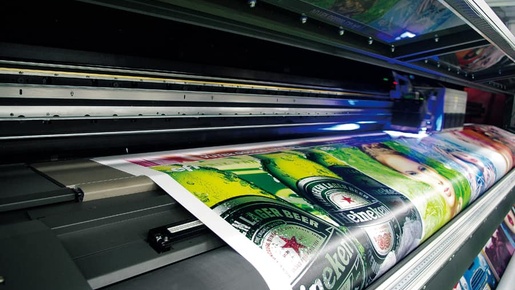
- Inkjet end-user sectors are growing consistently. Print advertising continues to be the largest sector, accounting for roughly $38.6 billion in 2017 alone. This value is set to grow closer to $50 billion by 2022.
- For inkjet, all end-use sectors are growing. Advertising print – including display and direct mail – is the biggest sector, worth around $38.6 billion in 2017. Smithers Pira predicts that this will expand to nearly $50 billion in 2022, although this market may be a slower growing sector compared to others. Packaging is expected to see the fastest growth between 2017 and 2022, with an estimated growth rate of 20% predicted. Inkjet innovation will see the investment of new press installations, especially when it comes to volume printing of corrugated packaging.
- As new technology arrives on the market, the value of both analogue and digital printing will continue to evolve. The volumes of toner and inkjet printing are set to grow, while the prices are expected to drop. All in all, digital printing offers a cost-effective solution that will continue to provide benefits to end users.
There is no doubt that the technology landscape is constantly changing and adapting. Each year, trends continue to change the world as we know it in order to provide a better, faster way forward. We are looking forward to seeing how these trends progress as we get closer towards the halfway mark of 2018. To find out more about how to benefit from digital printing trends in Durban and surrounds, get in touch with the Minuteman Press Pinetown team today.
 Minuteman Press Pinetown